

 Tyventure
From Tokyo to Okinawa: 10 Martial Arts Experiences Every Traveler Should Try in Japan
Japan is an incredible destination for travelers interested in martial arts. But you don't have to be a lifelong fighter or black belt to experience Japan's martial arts culture.
🥋 From Tokyo to Okinawa: Discover Japan Through Martial Arts
Japan is an incredible destination for travelers interested in martial arts. But you don't have to be a lifelong fighter or black belt to experience Japan's martial arts culture.
From the disciplined movements of kendo and kyudo to the explosive power of judo and sumo, Japan offers travelers opportunities to watch, learn and sometimes participate in traditional martial arts.
And if you're traveling all the way south to Okinawa, the experience becomes even more special. Okinawa is recognized as the birthplace of karate, with several traditional karate lineages and kobudo—the study of traditional Okinawan weapons. (Japan Travel)
So pack your comfortable clothes, leave your ego at the hotel and get ready to bow into the dojo.
Here are 10 martial arts experiences to consider adding to your Japan itinerary.
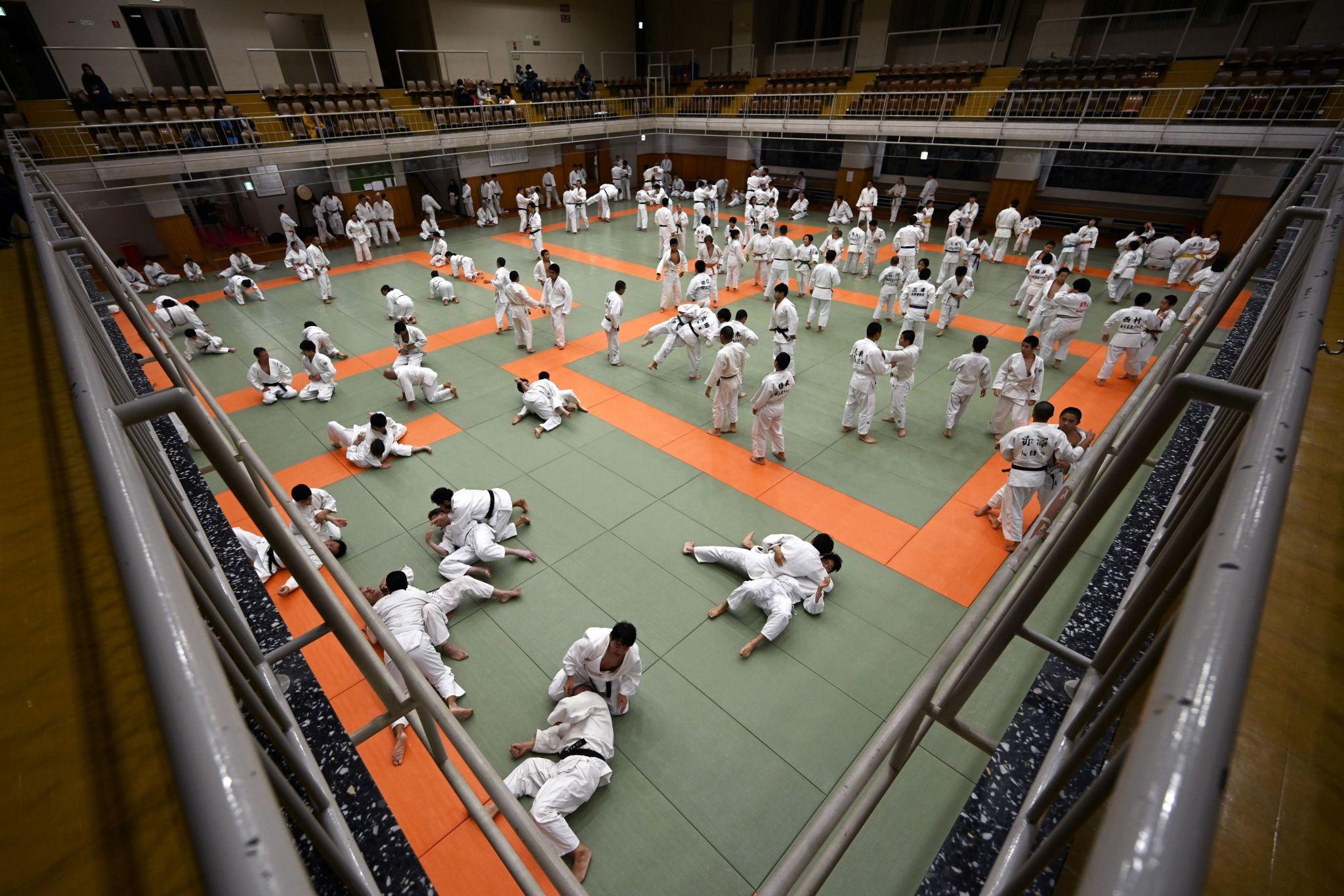
1. 🥋 Train in Judo at the Kodokan in Tokyo


For travelers interested in Japanese martial arts history, Tokyo's Kodokan Judo Institute is an obvious place to learn about judo.
Judo was founded by Jigoro Kano in 1882, and the Kodokan remains closely associated with the development and teaching of the art.
Rather than simply watching martial artists on television, experiencing judo inside a traditional training environment lets you appreciate the importance of:
-
Balance
-
Throws and grappling
-
Falling safely
-
Discipline
-
Respect for your training partner
-
Repetition and technical precision
Traveler tip: Don't assume you need competition experience. Some programs and organizations cater to visitors and foreign learners, although requirements can vary considerably between dojos.
Best for: Travelers interested in grappling, Olympic sports and Japanese martial arts history.
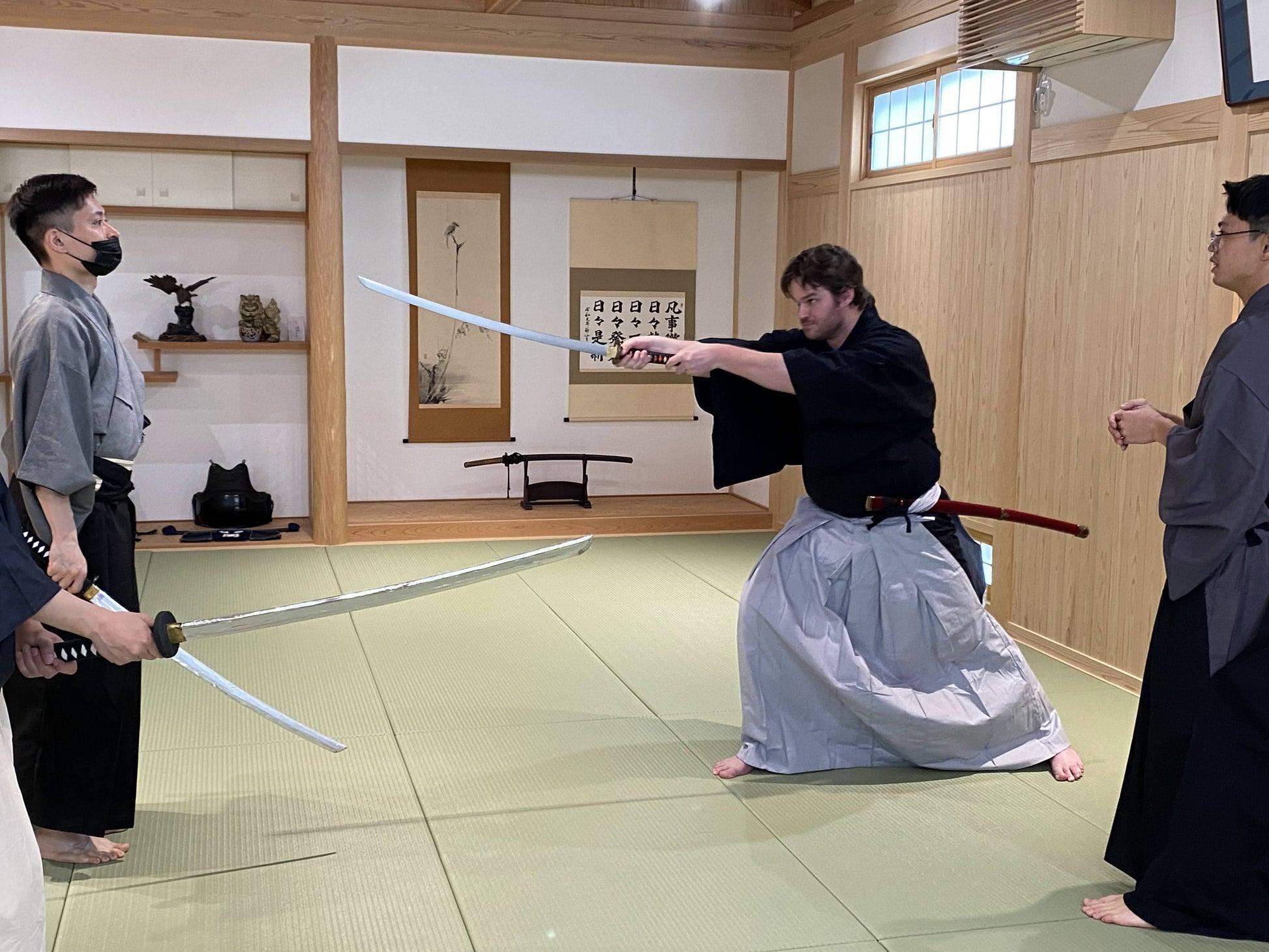
2. ⚔️ Learn Samurai Sword Techniques in Fuchu, Tokyo


Want to experience something that feels straight out of a samurai movie?
Head toward Fuchu, a city in western Tokyo, where visitors can participate in a samurai sword-fighting experience.
The Japan National Tourism Organization highlights a Fuchu experience combining Shinto culture with training at Geido Tate Hatoryu Takase Dojo. Participants learn how to handle a katana, practice basic stances and movements, and combine techniques into a choreographed sequence. The training lasts approximately 1.5–2 hours. (Japan Travel)
This is tate, a form of theatrical sword fighting used in stage and screen productions, rather than live combat.
That's an important distinction—and honestly, probably a good thing!
Best for: First-time visitors, history enthusiasts, photographers and travelers fascinated by samurai culture.
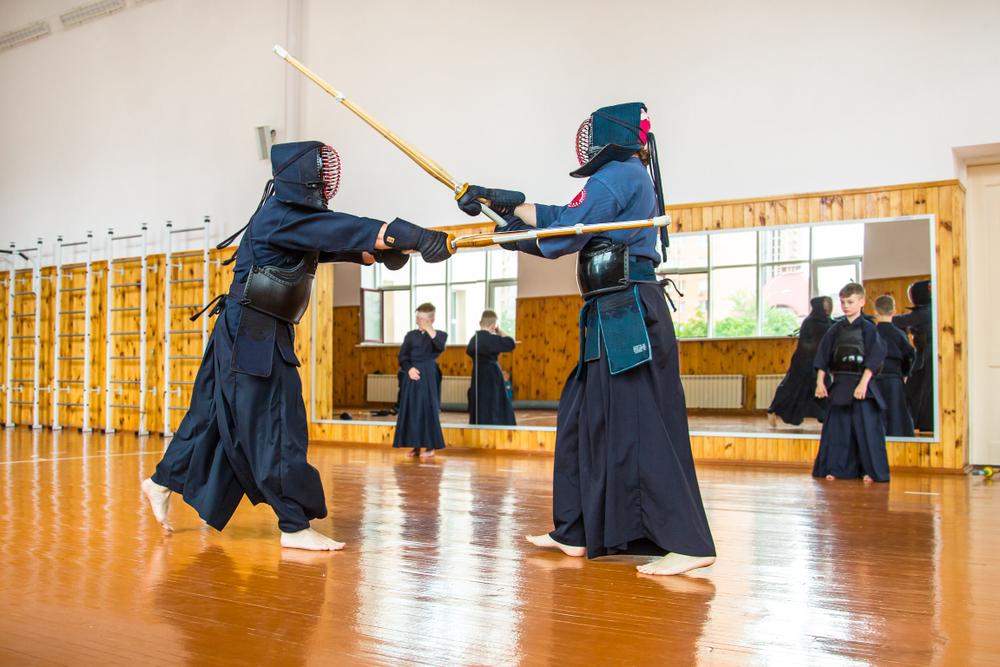
3. ⚔️ Experience Japanese Kendo


Kendo is one of Japan's most recognizable modern martial arts.
Using a bamboo sword called a shinai and protective armor known as bogu, practitioners develop striking technique, footwork, timing and mental discipline.
A visitor-friendly kendo session can give you an introduction to:
-
Basic etiquette
-
How to hold the shinai
-
Fundamental movements
-
Footwork
-
Striking practice
-
The philosophy behind kendo
The key is not to think of it as simply "Japanese fencing." Kendo has a strong emphasis on etiquette, discipline and controlled practice.
Tokyo also has a major connection to Japanese martial arts culture through the Nippon Budokan, which hosts national-level competitions across disciplines including kendo, judo, karate, aikido, kyudo and others. (Japan Travel)
Best for: Travelers who want an active dojo experience.
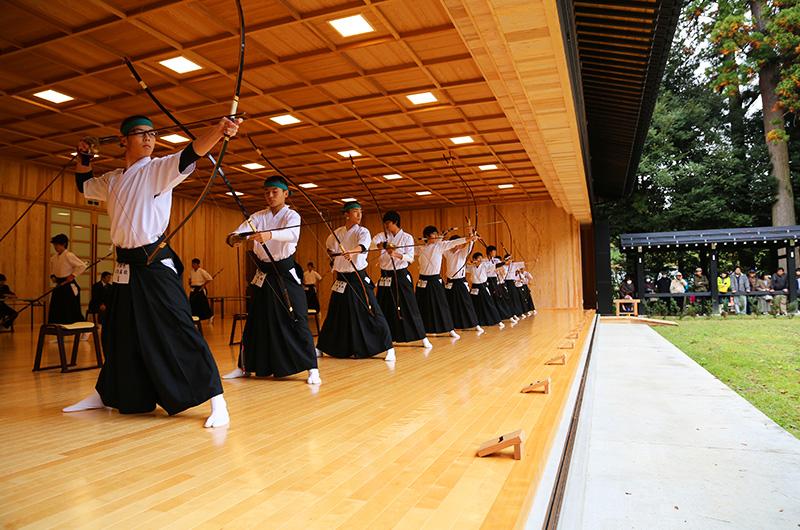
4. 🏹 Try Kyudo — Japan's Traditional Archery


Not every martial arts experience requires throwing punches.
Kyudo, or Japanese archery, is a fascinating combination of archery, concentration, posture and ritual.
The long Japanese bow—called a yumi—looks dramatically different from the compact bows commonly associated with Western archery.
For travelers, the appeal isn't simply hitting the target. Kyudo places considerable emphasis on the process of preparing the body and mind before releasing the arrow.
Some Tokyo experiences specifically welcome international visitors, including facilities offering English-language assistance.
Traveler tip: Ask whether the experience is an introductory session or formal dojo practice. The expectations can be very different.
Best for: Travelers who prefer precision, patience and mindfulness over physical contact.
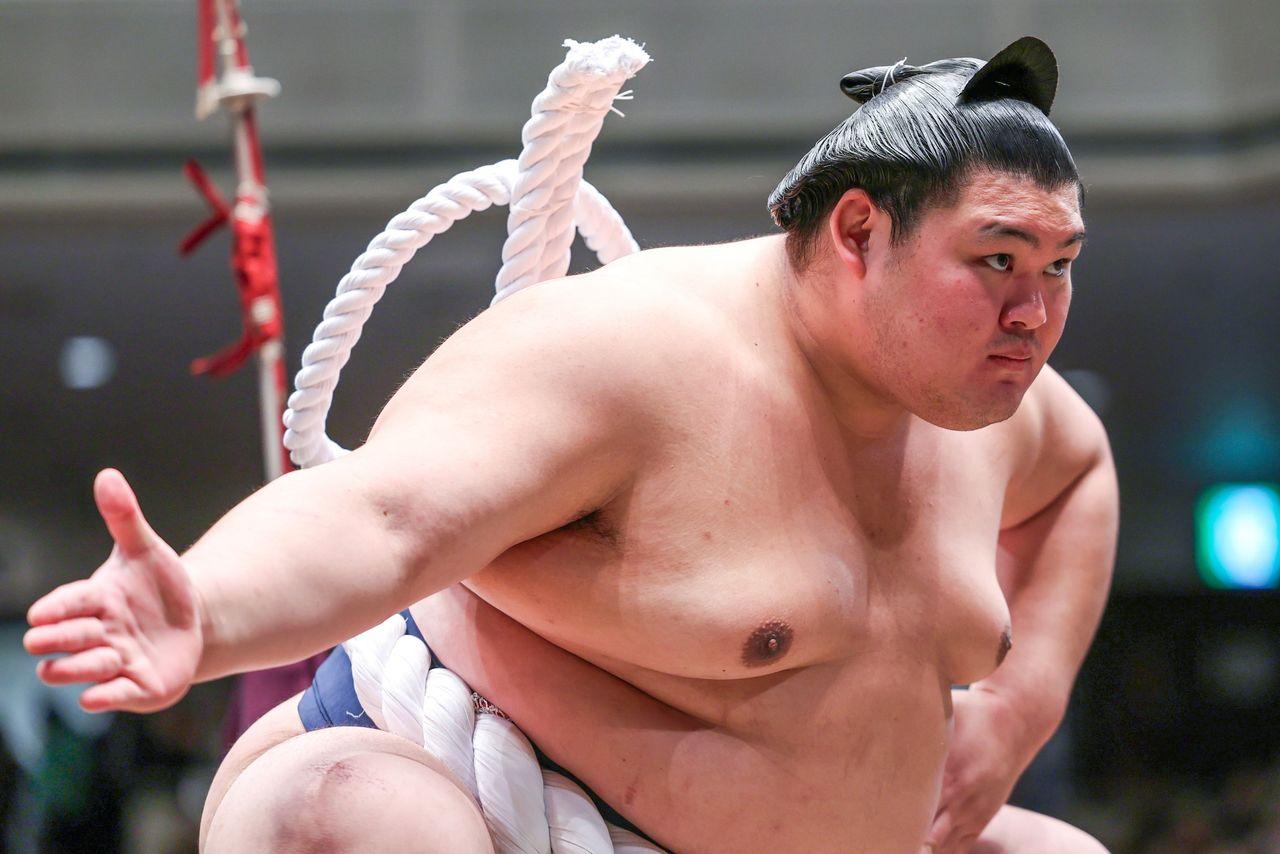
5. 🏆 Watch a Live Sumo Tournament in Tokyo


You don't necessarily have to participate in a martial art to experience it.
Sometimes, watching the professionals is the experience.
Tokyo hosts three of Japan's six major annual sumo tournaments, traditionally held in January, May and September at Ryogoku Kokugikan. Each tournament lasts approximately 15 days. (Japan Travel)
A visit to Ryogoku can become an entire cultural day:
Morning: Explore the neighborhood
Afternoon: Watch the wrestlers and tournament atmosphere
Evening: Enjoy traditional food such as chanko nabe
If your trip doesn't coincide with a tournament, other options include arranged visits to sumo stables or demonstrations, where visitors can observe training and learn about the sport. (Japan Travel)
Best for: Travelers who want to experience Japanese martial culture without getting thrown onto a mat.
6. 🥋 Explore Aikido and the Art of Controlled Movement


Aikido offers a very different experience from competitive combat sports.
Rather than focusing primarily on overpowering an opponent, aikido training traditionally emphasizes movement, positioning, balance and controlled techniques.
For travelers, a beginner-friendly aikido introduction can provide insight into another side of budo, Japan's broader martial arts culture.
You may notice that dojo etiquette is just as important as the techniques themselves.
Before participating, check whether visitors can join a regular class or whether the dojo offers a dedicated introductory session.
Best for: Travelers interested in traditional Japanese martial arts philosophy and controlled movement.
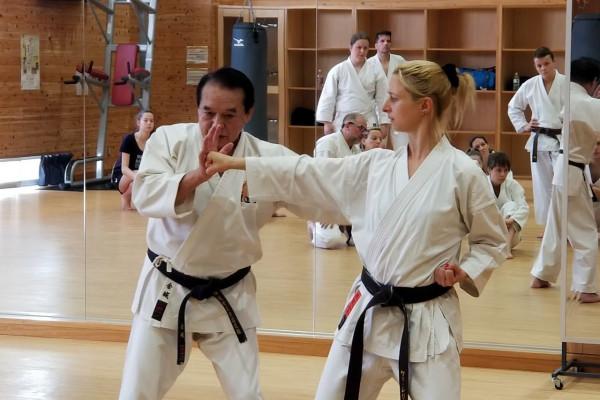
7. 🥋 Try Karate in Okinawa — the Birthplace of the Art


Now it's time to head south.
Okinawa is the birthplace of karate, making it one of the world's most important destinations for karate practitioners. (Japan Travel)
Okinawan karate developed through the Ryukyu Kingdom's cultural exchanges and eventually spread around the world. Today, Okinawa recognizes several major traditions, including:
-
Shuri-te
-
Tomari-te
-
Naha-te
-
Uechi-ryu
-
Kobudo
The Okinawa Traditional Karatedo Shinkokai describes karate as an art connected to Okinawan culture and emphasizes its defensive roots and principles of self-discipline.
And here's the cool part for travelers: you don't have to already be a karate expert.
Official Okinawa karate tourism programs include beginner experiences. One current program, for example, offers approximately 60 minutes of hands-on training and welcomes both beginners and experienced practitioners.
Best for: Anyone who wants to understand karate beyond what they have seen in movies or competitions.
8. 🥋 Visit the Okinawa Karate Kaikan


If karate is one of the main reasons you're visiting Okinawa, put the Okinawa Karate Kaikan on your itinerary.
Located in Tomigusuku, the facility is an important hub for Okinawan karate culture.
It can be a useful stop even if you're not ready for a full training session because you can combine your martial arts interests with learning about the history and traditions behind Okinawan karate.
For travelers visiting during major karate events, the experience can become even bigger.
For example, OKINAWA KARATE WEEK 2026 includes demonstrations of Shuri-Tomari-te, Naha-te, Uechi-ryu and kobudo, along with opportunities for practitioners to train. (沖縄空手ウィーク 2026)
Best for: Karate fans, martial arts travelers and visitors who want cultural context alongside training.
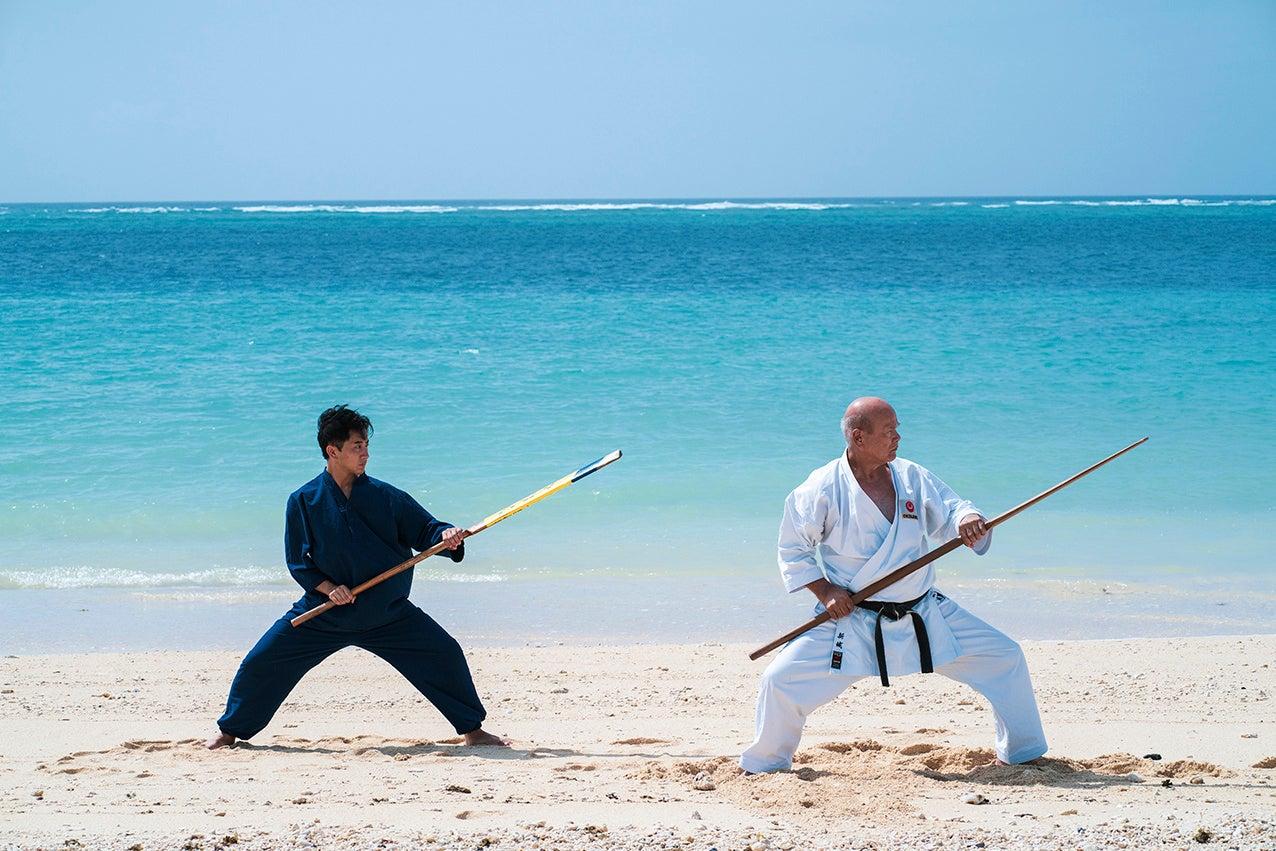
9. 🪵 Experience Okinawan Kobudo


If you're already interested in karate, take the next step into kobudo.
Okinawan kobudo refers to traditional martial arts involving weapons. Depending on the school, training may involve weapons such as the bo staff and other traditional implements.
Some Okinawa experiences combine karate with introductory kobudo instruction. One current tourism program, for example, describes a 90-minute session incorporating Okinawan Kenpo fundamentals, cultural history and basic kobudo weapon handling.
This is definitely one where you should follow the instructor carefully. Traditional weapons may look simple, but a six-foot staff can become surprisingly complicated when you're trying to coordinate your hands, feet and body at the same time.
Best for: Experienced martial artists and adventurous travelers looking for something beyond conventional karate.
10. 🥋 Join a Traditional Okinawan Dojo


For the most immersive experience, skip the staged tourist demonstration and spend time inside an actual dojo.
Okinawa has numerous karate schools, and the Okinawa Karate Navi provides information for travelers looking for dojos throughout the prefecture.
The experience can be as simple as:
Bow in → Warm up → Learn basics → Practice kata → Learn about the dojo → Bow out
One of the great things about training in Okinawa is that the experience can connect physical activity with local culture.
You're not simply learning how to punch or kick. You're getting a small glimpse into a tradition that developed on these islands and eventually spread across the globe.
Best for: Martial artists, karate practitioners and travelers seeking a deeper cultural experience.
🗺️ A Martial Arts Road Trip Through Japan
If you're serious about combining martial arts with sightseeing, consider building your trip around the following route:
🇯🇵 Stop 1 — Tokyo
Try:
🥋 Judo
⚔️ Samurai sword training
🥋 Kendo
🏹 Kyudo
🏆 Sumo
🚄 Stop 2 — Other Regions of Japan
Depending on your itinerary, consider adding experiences in places such as Osaka or Kumamoto. Japan's official tourism platform features martial-arts and traditional experiences in multiple regions, including kyudo and samurai-related activities. (Japan Travel)
✈️ Stop 3 — Okinawa
Try:
🥋 Traditional Okinawan karate
🏯 Okinawa Karate Kaikan
🪵 Kobudo
🥋 Traditional dojo training
🎎 Karate cultural events
Tokyo and Okinawa offer very different environments, making the combination especially interesting: the enormous urban energy of Tokyo followed by Okinawa's subtropical island culture and Ryukyu heritage. (Japan Travel)
🎒 Tips for Travelers Training in Japan
1. Contact the dojo before showing up
Don't assume that you can walk into a dojo and join a class.
Some schools welcome visitors, while others are designed primarily for regular members or require advance reservations.
2. Ask about language support
Some experiences have English-speaking instructors or interpreters, while traditional neighborhood dojos may operate primarily in Japanese.
3. Wear appropriate clothing
For introductory experiences, comfortable athletic clothing may be enough. More formal training may require a gi or other traditional uniform.
4. Learn basic dojo etiquette
A little respect goes a long way.
Watch what the regular students do and follow the instructor's lead.
A simple bow, quiet behavior and attentiveness can make your experience much smoother.
5. Don't treat the dojo like a theme park
Taking photographs is usually fine when permitted, but ask before photographing people, training sessions or ceremonial areas.
6. Know your physical limits
Martial arts can involve falls, joint movements, repetitive strikes and strenuous exercise.
Tell the instructor if you're a complete beginner or have limitations that could affect participation.
7. Don't worry about being a beginner
You don't need a black belt to appreciate Japanese martial arts.
In fact, being a beginner can make the experience more memorable because you're learning something completely new.
🧭 Why Martial Arts Tourism Is Different
A traditional sightseeing itinerary might take you to temples, shopping districts, restaurants and famous landmarks.
A martial arts itinerary lets you participate.
You learn how to bow.
You learn how to stand.
You learn how to move.
You make mistakes.
You try again.
And eventually, you start understanding why martial arts in Japan are about much more than fighting.
That's what makes the journey from Tokyo to Okinawa so interesting.
In Tokyo, you can encounter judo, kendo, sumo, kyudo and samurai-related experiences. In Okinawa, you can explore karate and kobudo in the cultural environment where these traditions developed. (Japan Travel)
🥋 Final Thoughts: Put Down the Camera and Step Onto the Tatami
Japan is a dream destination for martial arts enthusiasts—but you don't need to be a competitive fighter to enjoy it.
Whether you're watching sumo in Ryogoku, practicing sword movements in Fuchu, learning the fundamentals of kendo in Tokyo, or stepping into a karate dojo in Okinawa, martial arts can give you a completely different perspective on Japanese culture.
Don't just visit Japan. Experience it.
And if you're already planning that Tokyo-to-Okinawa adventure, maybe leave one day open on the itinerary.
You never know.
That one day in a dojo might become one of your favorite memories from Japan.
🔎 SEO Keywords
Primary: martial arts experiences in Japan
Secondary:
Japanese martial arts tourism, martial arts Japan travel, Tokyo martial arts experience, Okinawa karate experience, Okinawa karate tourism, karate training Japan, kendo Tokyo, judo Tokyo, samurai experience Japan, kyudo Japan, Japanese archery experience, sumo Tokyo, Okinawan kobudo, Japanese dojo experience, things to do in Tokyo, things to do in Okinawa
Suggested Tags
Japan Travel, Martial Arts Japan, Tokyo Travel, Okinawa Travel, Okinawa Karate, Japanese Martial Arts, Karate Tourism, Kendo Japan, Judo Japan, Samurai Experience, Kyudo Japan, Sumo Japan, Kobudo, Tokyo Experiences, Okinawa Experiences, Japan Adventure, Cultural Travel, Travel Japan, VibesTravelling, Japan Itinerary
Travel note: Experiences, schedules, prices, age requirements and visitor policies can change. Check the individual dojo or official tourism organization before booking. The Okinawa Karate Tourism site and JNTO are useful starting points for current information.
Sources & further planning
Japan National Tourism Organization — Martial Arts & Japan Experiences
Okinawa Karate Tourism
Visit Okinawa Japan
Tags :
Japan travel Martial Arts Japan Tokyo Travel Okinawa Travel Okinawa Karate Japanese Martial Arts Karate Tourism Kendo Japan judo Japan Samurai Experience Kyudo Japan Sumo Japan Kobudo Tokyo Experiences Okinawa Experiences Japan Adventure Cultural Travel Travel Japan VibesTravelling Japan ItineraryAdvertisement