

 Editor
Retro Brazil: Vintage Neighborhoods, Music & Classic Brazilian Culture
For travelers who love destinations with personality, Brazil offers an incredible opportunity to step into different chapters of the country's cultural history.
Retro Brazil: Vintage Neighborhoods, Music & Classic Brazilian Culture
There is a side of Brazil that exists beyond the famous beaches, football stadiums, and modern skyscrapers.
It can be found in cobblestone streets, colorful colonial buildings, old cafés, neighborhood bars, record stores, live music, street markets, vintage trams, and the rhythms drifting through city streets.
Welcome to Retro Brazil.
For travelers who love destinations with personality, Brazil offers an incredible opportunity to step into different chapters of the country's cultural history. From the bohemian streets of Rio de Janeiro to the colorful historic center of Salvador, the country has neighborhoods where the past remains visible while everyday Brazilian life continues around it.
And the best part?
You don't necessarily need a museum to experience it.
Sometimes, the most authentic history is happening right outside the door.


🎞️ What Makes Brazil Feel "Retro"?
Retro Brazil isn't about pretending that the country is frozen in the past.
Instead, it's about discovering places where older architecture, traditional music, food, transportation, and local customs remain part of modern life.
In Rio de Janeiro, for example, neighborhoods such as Santa Teresa and Lapa combine historic architecture with restaurants, bars, cultural spaces and live music. Rio's tourism authority specifically highlights Lapa and Santa Teresa as areas where samba, culture, historic attractions and the famous Santa Teresa tram come together. (Riotur.Rio)
In Salvador, the historic Pelourinho provides another perspective. Its colorful buildings and cobblestone streets reflect centuries of Brazilian history, while music, restaurants, shops and cultural activity continue to bring the neighborhood to life.
That's the magic of Retro Brazil:
The past isn't necessarily separated from the present.
It lives alongside it.
🚋 1. Santa Teresa, Rio de Janeiro — Ride Through Old Rio
If you want to begin your Retro Brazil adventure, Santa Teresa is an excellent place to start.
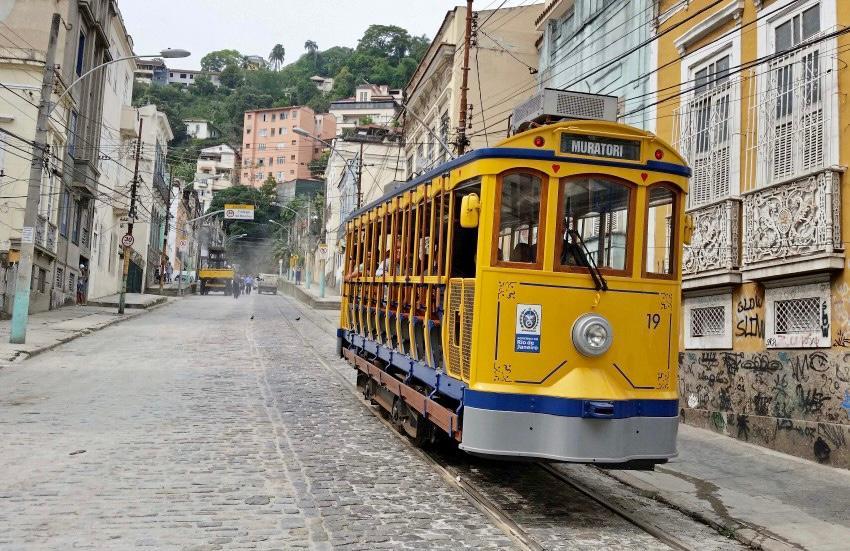
Located on a hill above central Rio, Santa Teresa is known for its winding streets, cobblestones, historic buildings, artists' studios, restaurants and cultural atmosphere. The neighborhood's famous yellow Bondinho de Santa Teresa adds another unmistakably old-school element to the experience. (Riotur.Rio)
Imagine walking along a narrow street while colorful houses climb the hillside around you.
Then you hear it:
Ding... ding...
The historic tram approaches.
Suddenly, Rio feels like another era.
Santa Teresa has long been associated with artists and musicians, and its hilltop setting gives travelers a different perspective of the city from the better-known beach districts. (To Know Brazil)
📸 Retro Photo Idea
Look for:
-
Yellow trams
-
Cobblestone streets
-
Old balconies
-
Colorful buildings
-
Street art
-
Small cafés
-
Vintage signs
-
Hillside views
Travel tip: Don't rush Santa Teresa. The neighborhood is best experienced slowly, allowing time to wander into galleries, cafés and quieter streets.
🎶 2. Lapa — Where Architecture Meets Samba
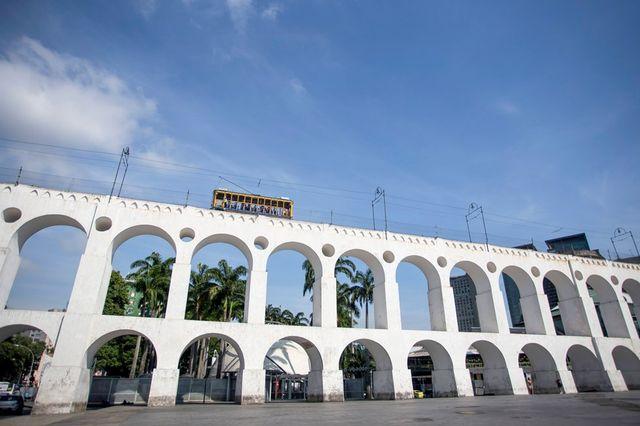
Just below Santa Teresa is Lapa, one of Rio's most recognizable historic neighborhoods.
The enormous Arcos da Lapa, originally constructed as an aqueduct during the colonial period, dominate the area. The structure later became associated with the city's tram system and remains one of Rio's defining landmarks. (Riodejaneiro Guides)
But Lapa isn't simply about architecture.
It's about sound.
Samba, live music, bars and nightlife have helped give Lapa its reputation as one of Rio's great cultural gathering places. The neighborhood also includes historic streets such as Rua do Lavradio, where antique shops and cultural activities contribute to the area's vintage atmosphere. (Riodejaneiro Guides)


🎵 The Retro Soundtrack
If Retro Brazil had a soundtrack, Lapa would be one of the places to hear it.
Think:
Samba → Choro → Bossa Nova → Brazilian popular music
And don't be surprised if a casual evening turns into an impromptu musical experience.
That's part of the charm.
🏘️ 3. Pelourinho, Salvador — Color, History & Afro-Brazilian Culture
Travel north to Salvador, Bahia, and the visual character changes dramatically.
Pelourinho, located in Salvador's historic center, is famous for its colorful colonial architecture, cobblestone streets, churches and lively cultural atmosphere. The neighborhood has undergone major restoration and is recognized as an important heritage area.
But there is much more to Pelourinho than pretty buildings.
Salvador's culture is deeply connected to African and Portuguese influences, and music, dance, religion, cuisine and traditions all reflect the complex history of Bahia.
This is an important part of understanding Brazilian culture.
The country's "classic" culture isn't one single thing. Brazil is enormous, and its traditions have been shaped by Indigenous peoples, Africans, Europeans and many immigrant communities.
Pelourinho is one place where those layers become especially visible.
🎨 What to Experience
While exploring the historic district, look for:
-
Colorful façades
-
Traditional churches
-
Local crafts
-
Bahian cuisine
-
Capoeira performances
-
Drumming
-
Local music
-
Historic plazas
Take your time.
Pelourinho rewards travelers who stop looking at the map and start looking at the details.
🎺 4. Rediscover Brazil Through Its Music
You can't really talk about Brazilian nostalgia without talking about music.
Music is one of the best ways to understand the country's regional identities.
🎵 Samba
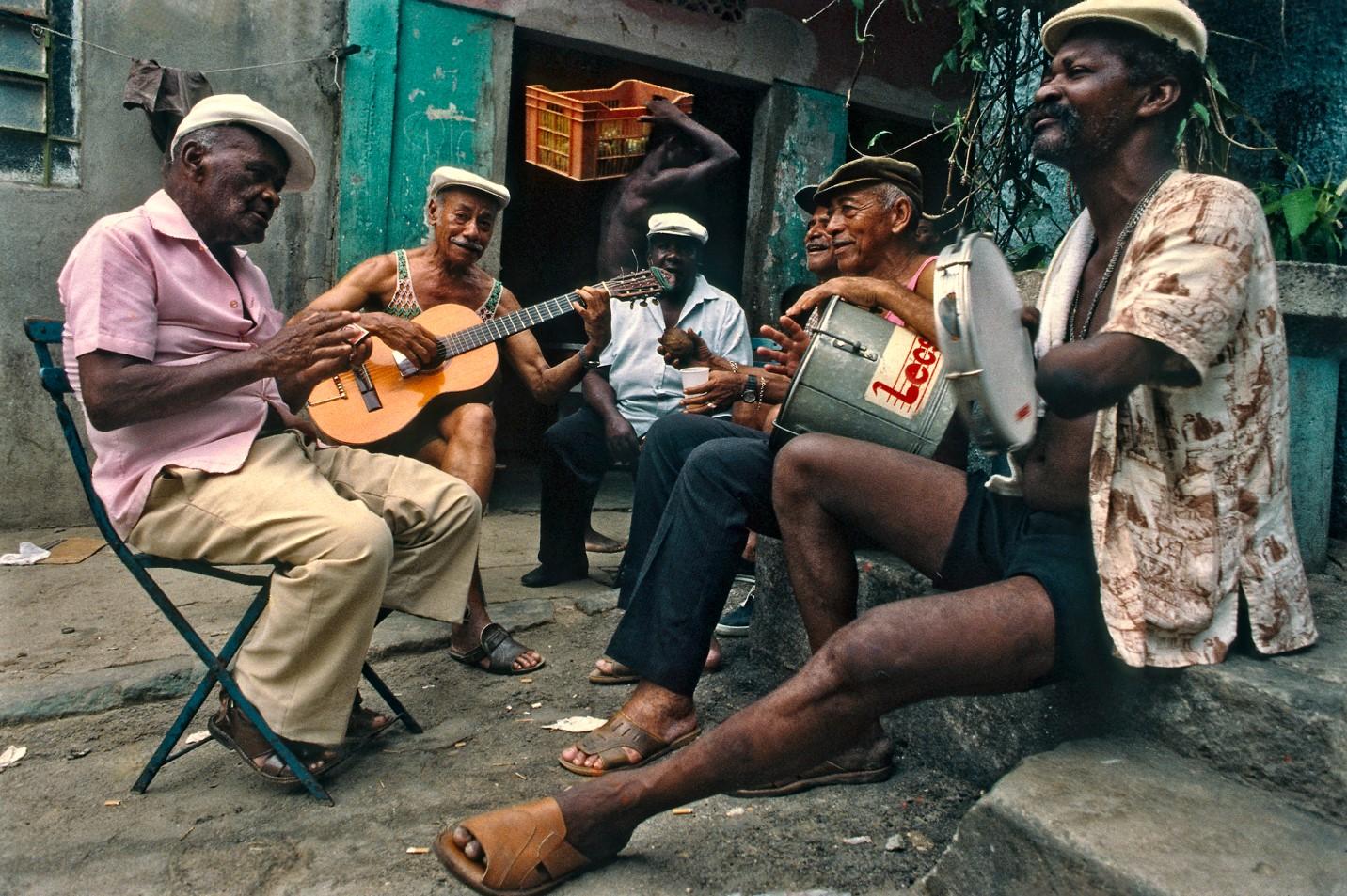
Samba is strongly associated with Rio de Janeiro and has deep connections to Afro-Brazilian communities and traditions.
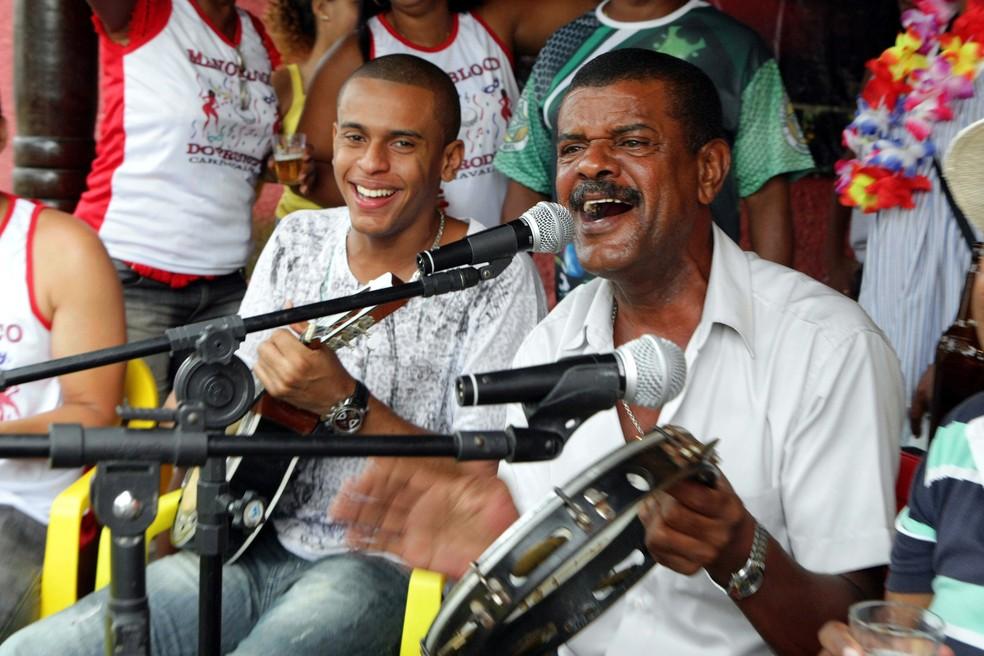
Traditional samba gatherings, known as rodas de samba, emphasize community and participation rather than simply watching a performance.
Historical photographs of Rio's samba culture show musicians gathering together in intimate settings, reinforcing how closely the genre has been connected with everyday social life.
🎸 Choro
Often described as one of Brazil's important instrumental traditions, choro combines intricate melodies with rhythmic energy.
Listen for:
-
Guitar
-
Mandolin
-
Flute
-
Percussion
It has a sound that can feel simultaneously sophisticated and wonderfully informal.
🌴 Bossa Nova
Then there's bossa nova.
For many international travelers, bossa nova immediately brings images of Rio, beaches, cafés and relaxed evenings.
Its influence spread far beyond Brazil, helping introduce Brazilian musical ideas to audiences around the world.
🪘 Regional Sounds
And don't stop there.
Brazil's musical landscape includes:
-
Forró
-
Frevo
-
Axé
-
Maracatu
-
MPB
-
Pagode
-
Sertanejo
-
Choro
-
Samba
Every region has its own musical story.
☕ 5. The Classic Brazilian Café & Boteco Experience
Sometimes you don't need an attraction at all.
Find a neighborhood café.
Sit down.
Order something.
Watch the street.
That's travel.
Brazil's traditional neighborhood botecos are another way to experience everyday social culture. These casual establishments can be places where friends meet for food, drinks and conversation.
For the traveler interested in retro culture, the appeal isn't necessarily luxury.
It's atmosphere.
Imagine:
An old tiled floor.
A ceiling fan turning slowly.
A radio playing Brazilian music.
A handwritten menu.
A table outside.
People talking across the sidewalk.
That's the kind of scene that makes a travel memory stick.
🍛 6. Taste the Brazil of Yesterday
Brazilian cuisine is just as diverse as its music.
Depending on where you travel, you might encounter dishes and ingredients influenced by Indigenous, African, Portuguese and immigrant traditions.
Some foods worth seeking out include:
🫘 Feijoada
A hearty black-bean and pork stew traditionally associated with Brazilian cuisine.
🧀 Pão de queijo
Small, chewy cheese breads that make an excellent snack.
🍤 Moqueca
A fragrant seafood stew strongly associated with coastal regions, particularly Bahia and Espírito Santo.
🥟 Coxinha
A popular savory snack with shredded chicken surrounded by dough and fried.
🥥 Acarajé
A Bahian specialty made from black-eyed pea dough and fried, often served with flavorful fillings and sauces.
Food is one of the easiest ways to turn a historical trip into a sensory experience.
You don't just see Brazil.
You taste it.
🏛️ 7. Look Beyond Rio: Historic Brazil
While Rio de Janeiro and Salvador are excellent destinations for a retro-themed trip, Brazil has historic neighborhoods and cities throughout the country.
Consider exploring places such as:
🇧🇷 São Luís, Maranhão
Known for its historic center and distinctive tiled architecture.
🇧🇷 Recife, Pernambuco
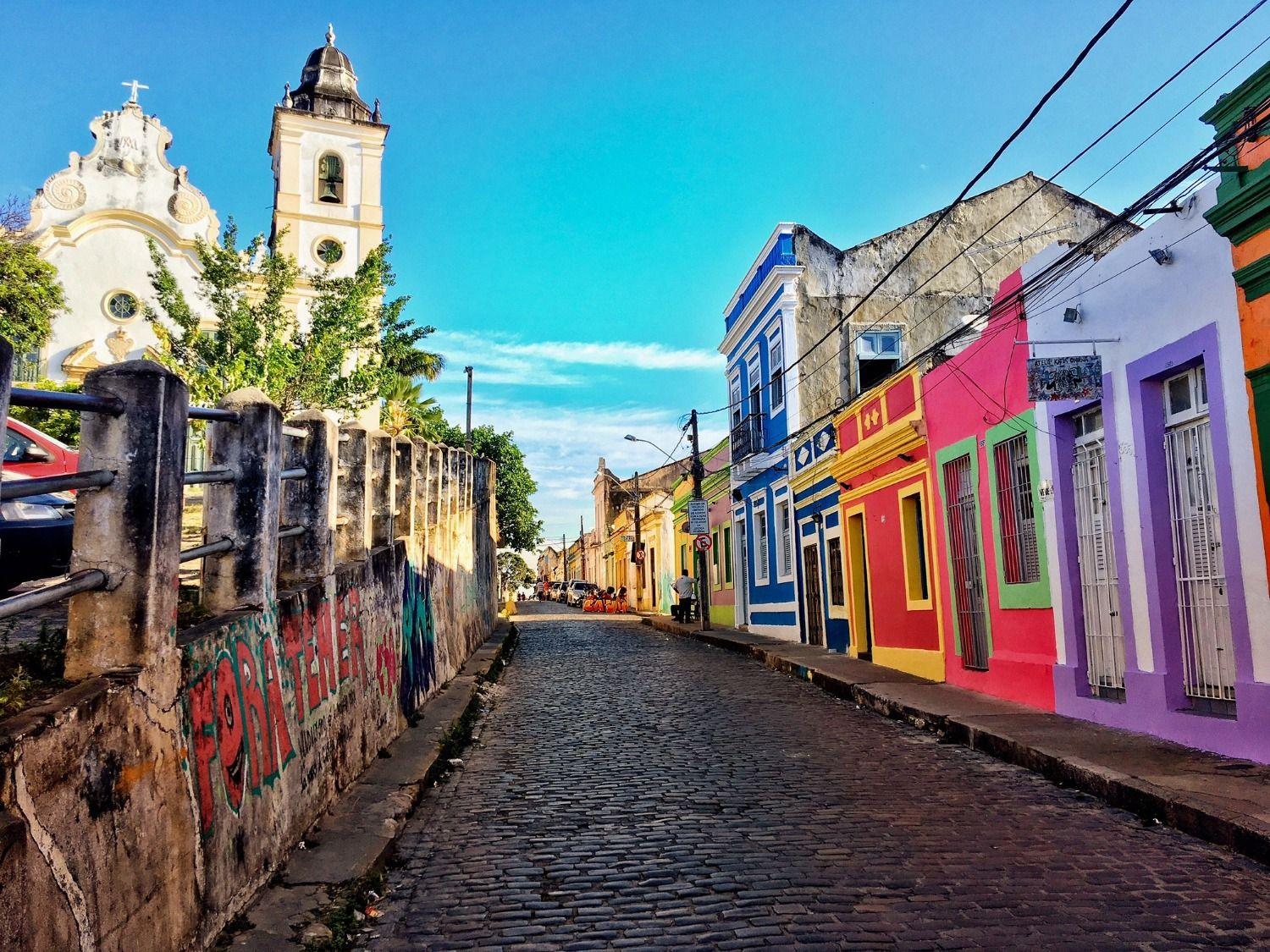
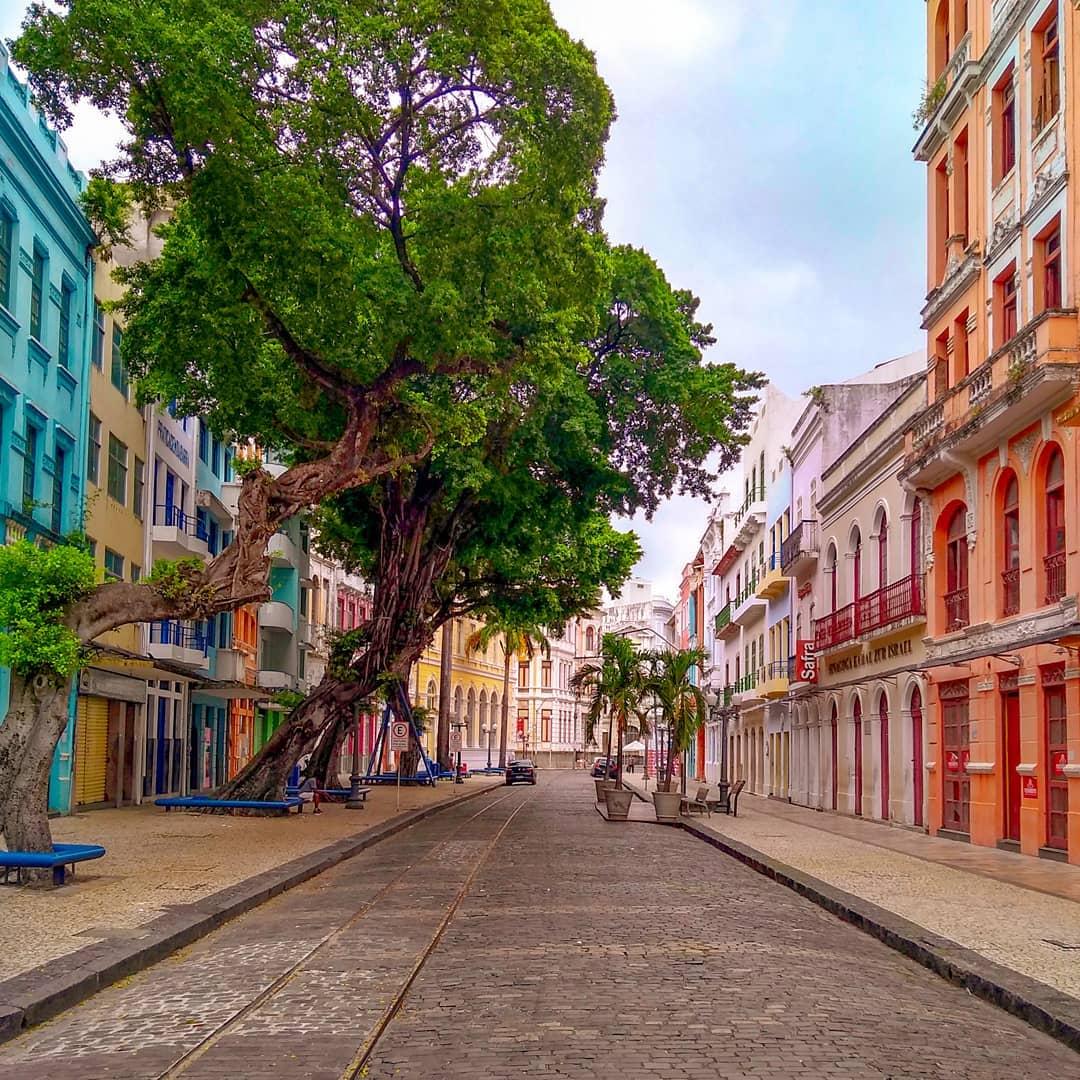
Explore areas such as Recife Antigo and experience Pernambuco's strong cultural and musical traditions.
🇧🇷 Olinda, Pernambuco
Colorful colonial buildings, hills, churches and traditional Carnival culture make Olinda particularly atmospheric.
🇧🇷 Ouro Preto, Minas Gerais
A historic city famous for its colonial architecture, churches and mountainous setting.
🇧🇷 São Paulo
For a different interpretation of retro Brazil, explore historic neighborhoods, traditional markets, cafés, music venues and street-art districts alongside the city's modern skyline.


📻 8. Build Your Own Retro Brazil Playlist
Want to make your trip even more immersive?
Create a Brazilian-inspired playlist before you go.
You could organize it into different moods:
Morning:
🎸 Bossa nova and relaxed Brazilian guitar
Afternoon:
🎺 Choro and classic MPB
Evening:
🥁 Samba and pagode
Bahia:
🪘 Axé, samba-reggae and regional sounds
Northeast:
🪗 Forró and frevo
Then put your headphones away occasionally.
Because there's one important rule:
Don't experience Brazilian music only through headphones.
Go find it being played live.
📷 9. How to Photograph Retro Brazil
Retro Brazil is practically made for photography.
Instead of photographing only famous landmarks, focus on details.
Try capturing:
📸 A weathered doorway
📸 An old bicycle leaning against a wall
📸 A musician playing guitar
📸 Colorful colonial buildings
📸 Street signs
📸 Vintage storefronts
📸 Café tables
📸 Historic trams
📸 Cobblestone streets
📸 Local markets
📸 Old architecture beside modern buildings
The contrast is what makes the photographs interesting.
An old colonial building with a modern motorcycle parked outside can tell a better story than a perfectly staged tourist photograph.
🧭 A Sample Retro Brazil Travel Route
If you want to build an entire trip around Brazil's historic and cultural atmosphere, here's one possible framework:
Days 1–3 — Rio de Janeiro
Explore Lapa, Santa Teresa and historic central Rio.
Days 4–6 — Salvador
Spend time around Pelourinho and explore Bahian food, music and culture.
Days 7–8 — Recife & Olinda
Experience historic streets and Pernambuco's distinctive cultural traditions.
Days 9–10 — Ouro Preto
Slow the pace down and explore colonial architecture and mountain scenery.
Days 11–12 — São Paulo
Finish with a modern city that still contains layers of historic neighborhoods, art, music and food culture.
This type of itinerary isn't about seeing everything.
It's about feeling the character of each place.
🕰️ The Real Beauty of Retro Brazil
The most interesting thing about Retro Brazil is that it isn't really about the past.
It's about how the past continues to influence the present.
A tram still moves through a historic neighborhood.
A samba rhythm comes from a nearby street.
A century-old building becomes a café.
An old recipe appears on a modern restaurant menu.
A traditional instrument plays alongside contemporary music.
And people continue creating new memories in places that have already witnessed generations of Brazilian life.
That's what makes historical travel so fascinating.
You aren't simply visiting history.
You're walking through it while it's still being lived.
🌎 Final Thoughts: Experience the Vibes of Brazil
If your idea of travel goes beyond famous landmarks, Brazil deserves a place on your list.
Come for the beaches.
Stay for the neighborhoods.
Listen to the music.
Taste the food.
Walk the old streets.
Talk with locals.
Explore the markets.
Take the tram.
Find the little cafés.
And most importantly, slow down enough to notice the details.
Because sometimes the most memorable travel experiences aren't found at the biggest attraction.
They're found around the corner.
That's the vibe of Retro Brazil. 🇧🇷
📌 Retro Brazil Travel Checklist
Before your trip, consider adding these experiences to your itinerary:
-
☑️ Explore Santa Teresa in Rio
-
☑️ Ride the historic Santa Teresa tram
-
☑️ Walk through Lapa
-
☑️ See the Arcos da Lapa
-
☑️ Experience a roda de samba
-
☑️ Explore Pelourinho in Salvador
-
☑️ Try traditional Brazilian snacks
-
☑️ Visit a local market
-
☑️ Listen to live Brazilian music
-
☑️ Explore a historic city outside the major tourist centers
-
☑️ Photograph colonial architecture
-
☑️ Spend time in neighborhood cafés and botecos
-
☑️ Learn about Brazil's African, Indigenous, Portuguese and immigrant cultural influences
🔎 SEO Keywords
Primary:
Retro Brazil
Secondary:
vintage Brazil, Brazilian culture, classic Brazilian culture, historic Brazil, Brazil travel guide, vintage neighborhoods Brazil, Brazilian music, samba Brazil, Rio de Janeiro travel, Santa Teresa Rio, Lapa Rio de Janeiro, Pelourinho Salvador, Salvador Brazil travel, Brazilian food, historic neighborhoods Brazil, Brazil cultural tourism, things to do in Brazil
Long-tail keywords:
-
best vintage neighborhoods in Brazil
-
where to experience traditional Brazilian culture
-
historic neighborhoods to visit in Brazil
-
best places to experience samba in Brazil
-
retro travel destinations in Brazil
-
traditional Brazilian music and culture
-
historic places to visit in Rio de Janeiro
-
colorful historic neighborhoods in Brazil
Suggested WordPress Tags
Brazil Travel, Retro Brazil, Brazilian Culture, Rio de Janeiro, Salvador Brazil, Samba, Brazilian Music, Historic Neighborhoods, Vintage Travel, Cultural Travel, South America Travel, Brazil Food, Santa Teresa, Lapa, Pelourinho
Suggested Featured Image


Advertisement