

 Tyventure
The Ultimate Muay Thai Travel Guide: Bangkok, Phuket, Chiang Mai & Beyond
If you've ever dreamed of traveling to Thailand, putting on a pair of gloves, wrapping your hands and training Muay Thai where the sport has deep roots, you're not alone.
The Ultimate Muay Thai Travel Guide: Bangkok, Phuket, Chiang Mai & Beyond
If you've ever dreamed of traveling to Thailand, putting on a pair of gloves, wrapping your hands and training Muay Thai where the sport has deep roots, you're not alone.
Thailand has become one of the world's most popular destinations for Muay Thai training, attracting complete beginners, fitness travelers, amateur fighters and experienced professionals.
But here's the fun part: where you train can completely change your Thailand experience.
Bangkok puts you close to the country's famous stadium scene. Phuket combines serious training with beaches and an enormous international fitness community. Chiang Mai offers a slower northern atmosphere and numerous smaller gyms. And beyond those three destinations, places such as Pattaya, Koh Samui, Krabi and Pai offer their own versions of the Muay Thai experience.
So grab your gloves—or just your adventurous spirit—and let's explore Thailand through the world of Muay Thai.


🥊 Why Travel to Thailand for Muay Thai?
Muay Thai is more than simply a combat sport. It is deeply connected to Thai sporting culture and has developed into a major part of Thailand's international tourism scene.
For travelers, training in Thailand can mean much more than spending an hour hitting pads.
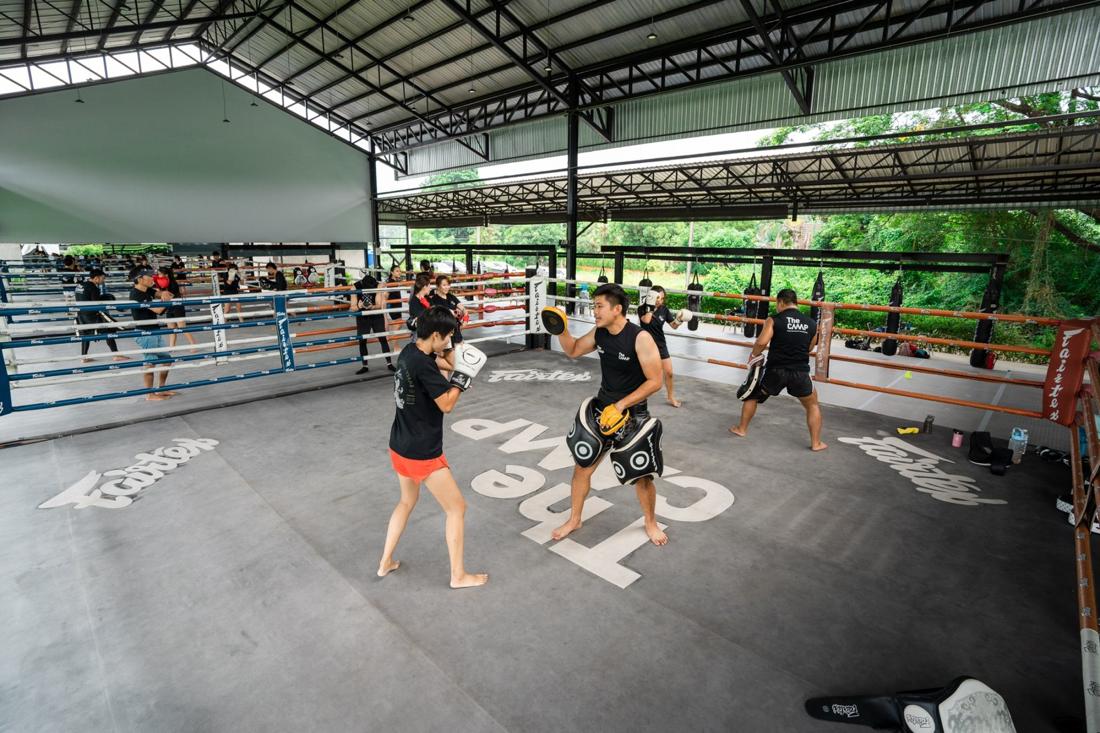
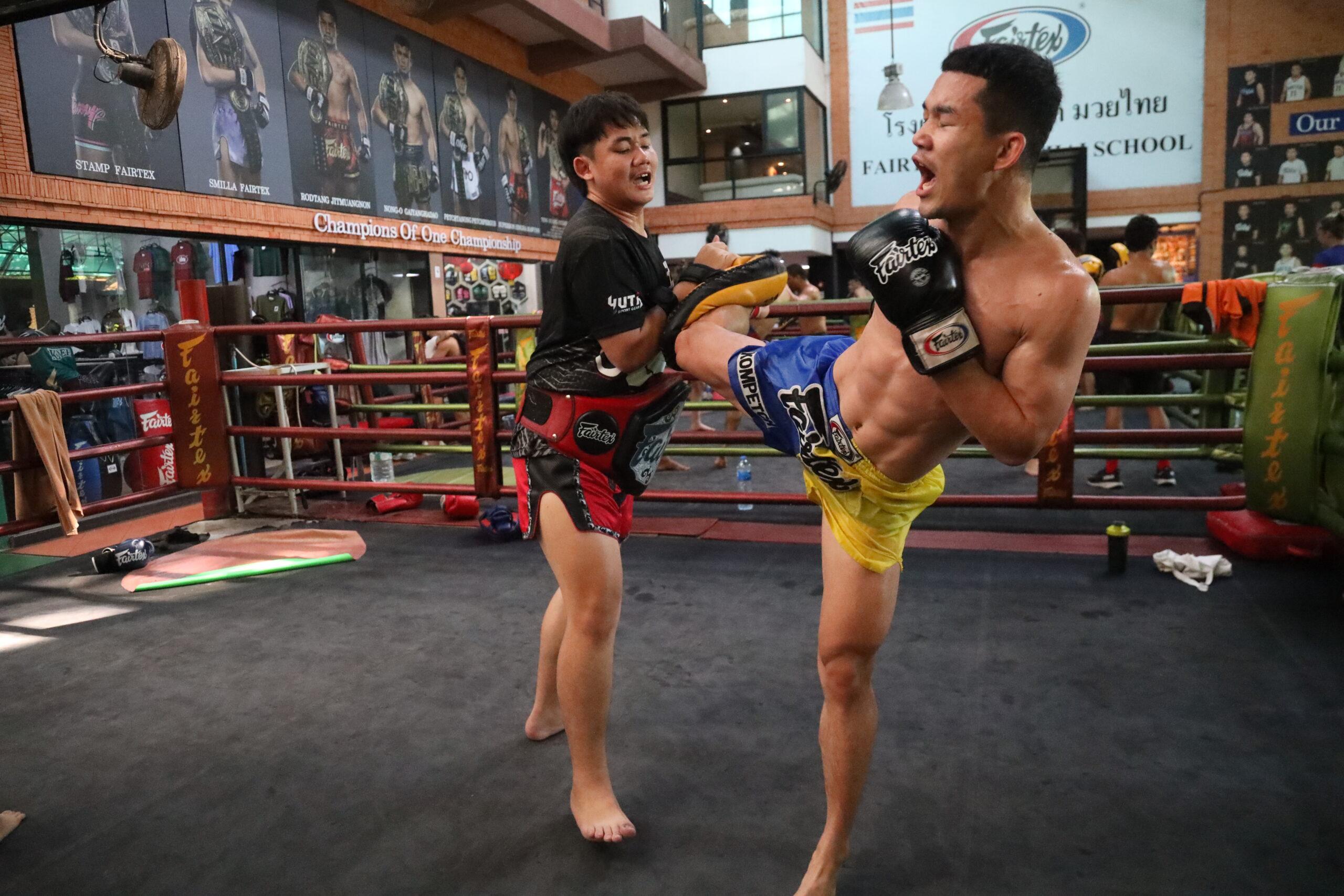
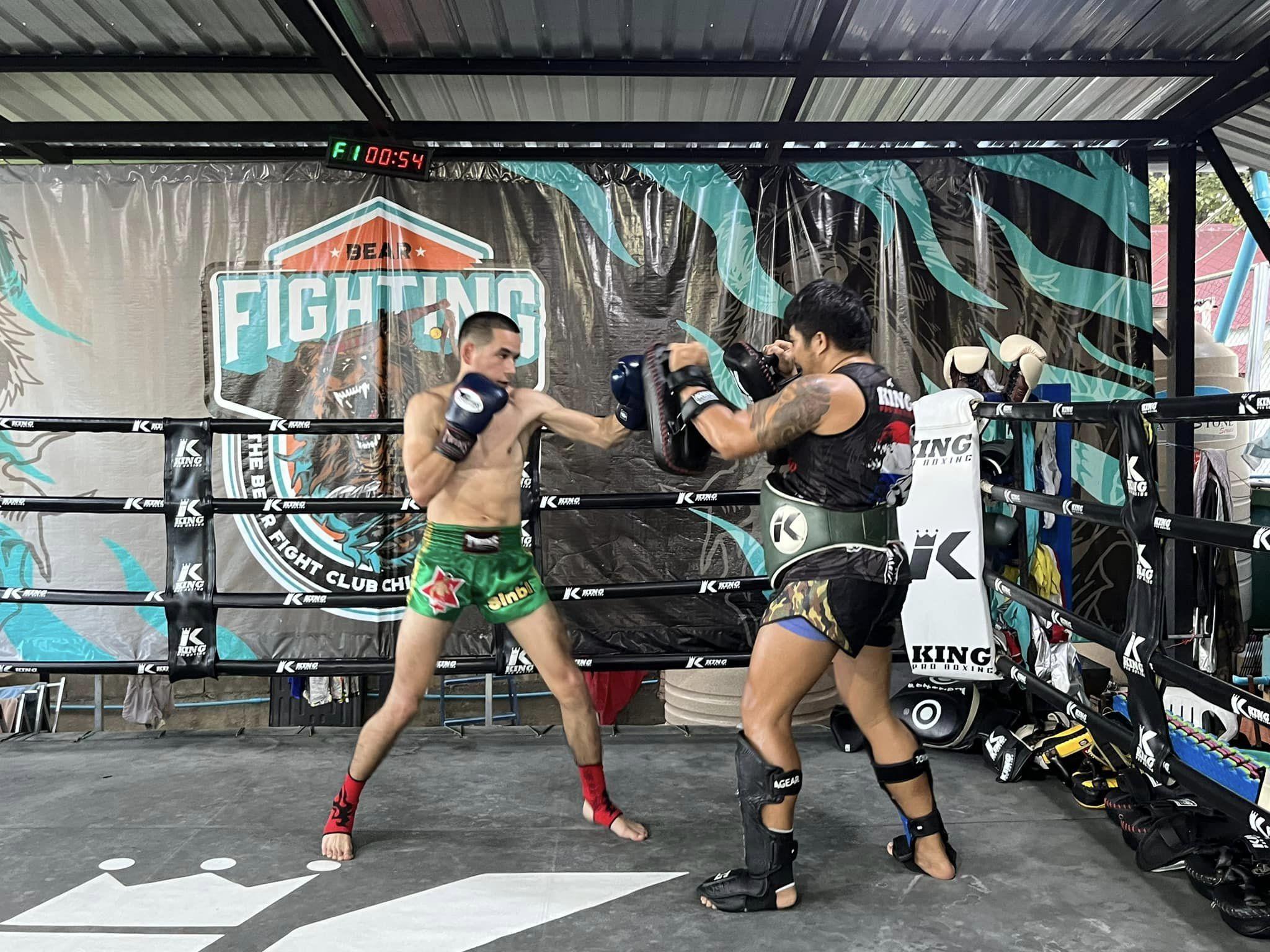
A typical camp experience may include:
-
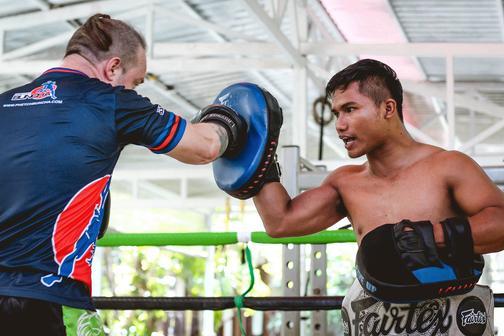
🥊 Pad work
-
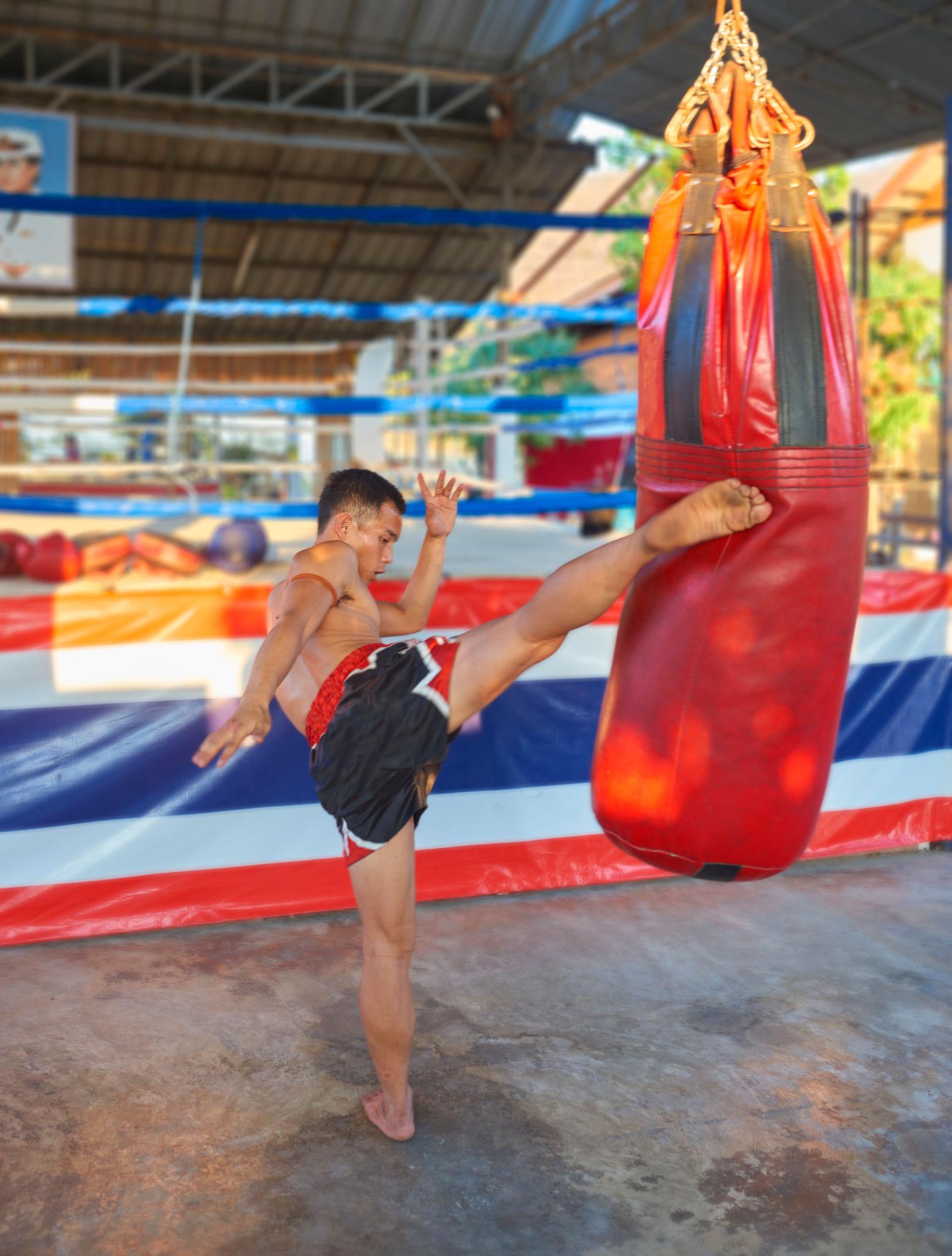
🦵 Heavy-bag training
-
🧘 Warm-ups and stretching
-
🏃 Running or conditioning
-
🤼 Clinching
-
🥋 Technique drills
-
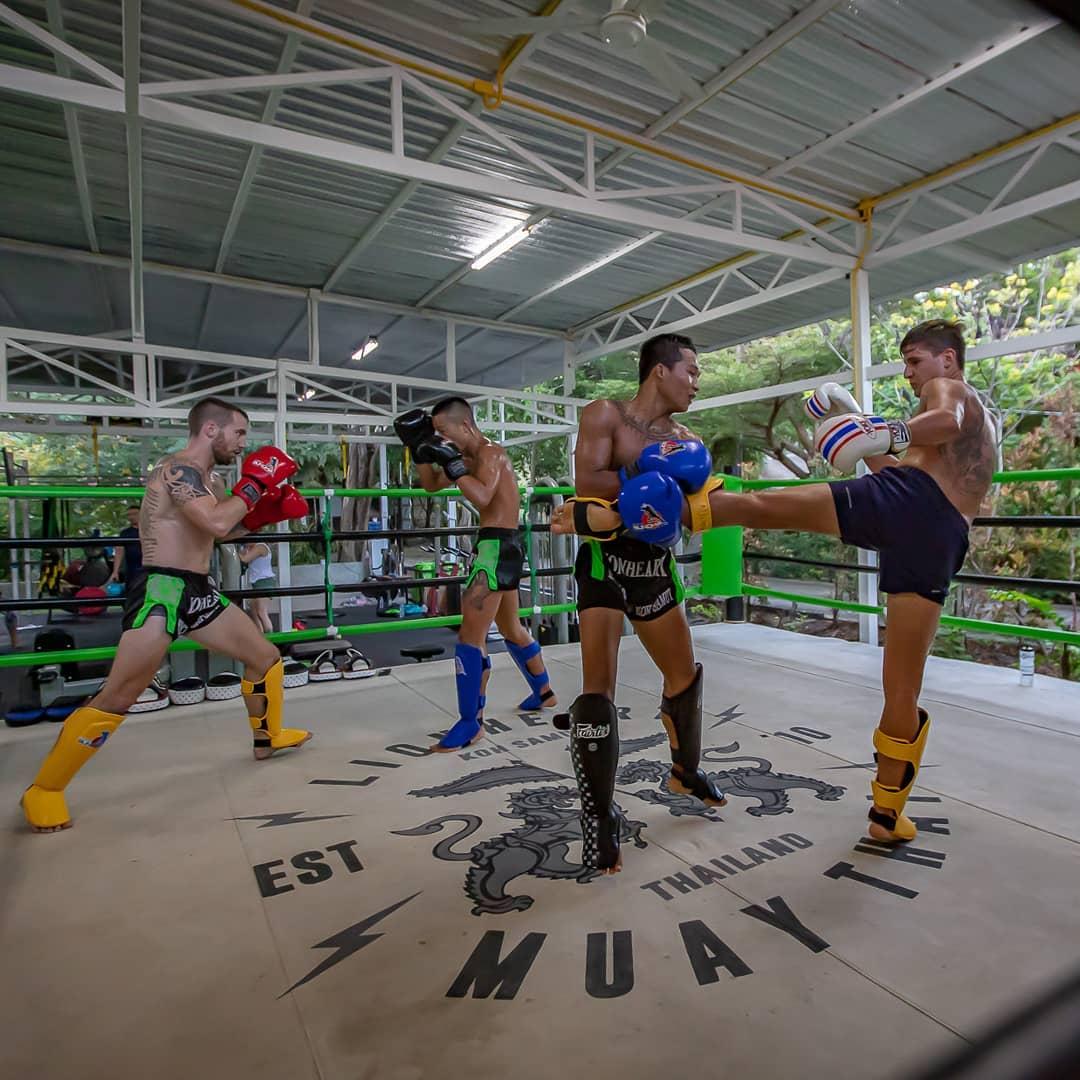
🥊 Sparring at appropriate levels
-
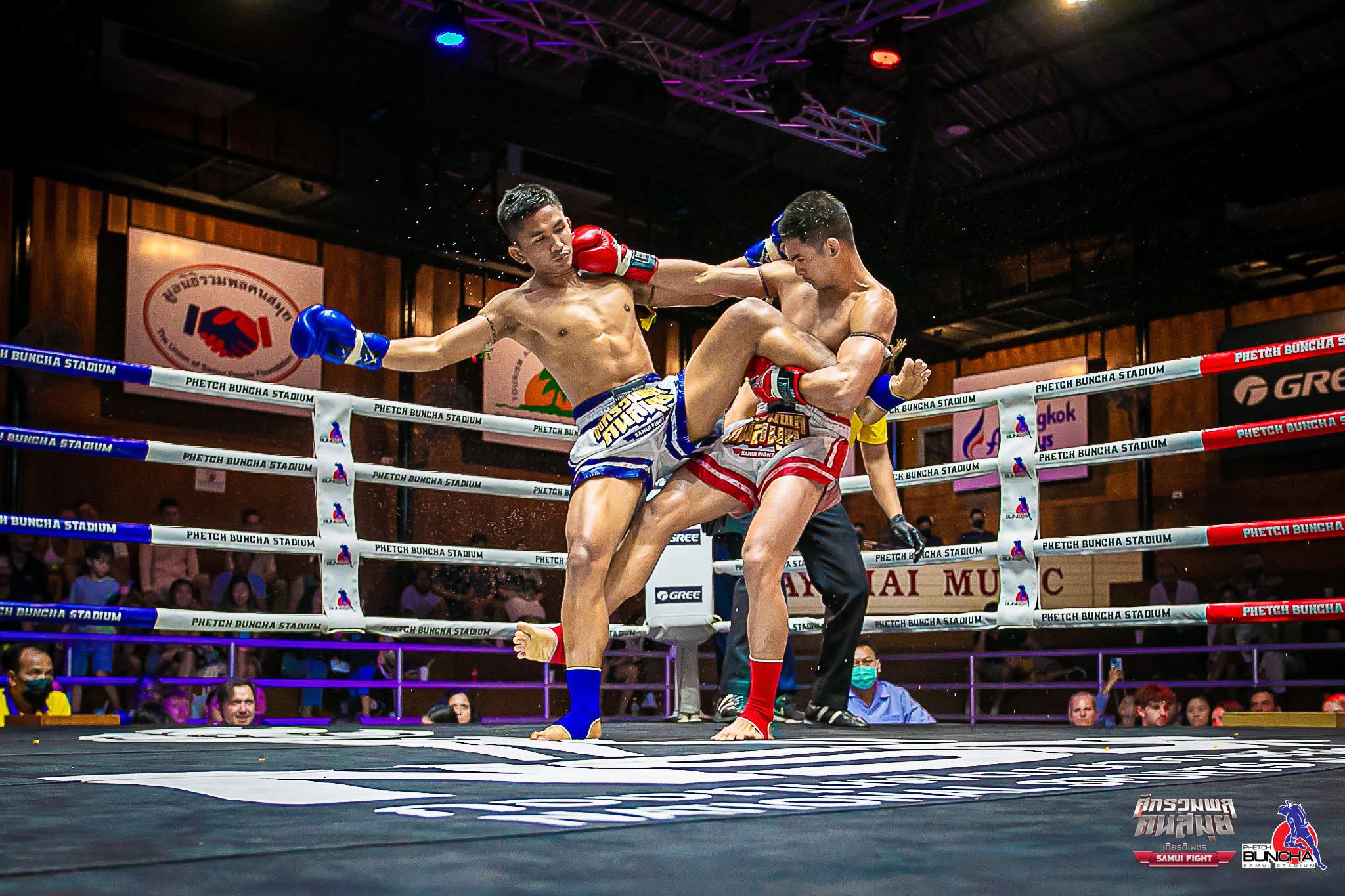
🏆 Watching live fights
-
🍜 Experiencing Thai food and local culture
Many tourist-oriented gyms welcome beginners, so you don't necessarily need previous martial arts experience. Current travel guides report that beginner-friendly sessions and short-term drop-ins are widely available, with single classes commonly running around ฿300–600, although prices vary considerably by gym and package. (Visit Thailand Today)
Important: Training intensity varies dramatically between gyms. Ask about the class structure before booking, particularly if you're completely new to Muay Thai.
🇹🇭 1. Bangkok — Train Where the Stadium Culture Lives


Why visit Bangkok?
If watching high-level Muay Thai is an important part of your trip, Bangkok deserves serious consideration.
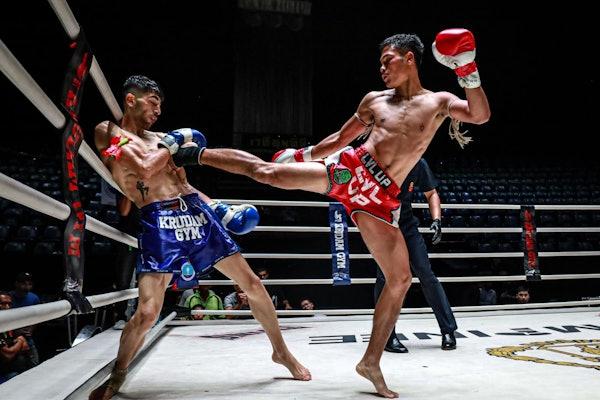
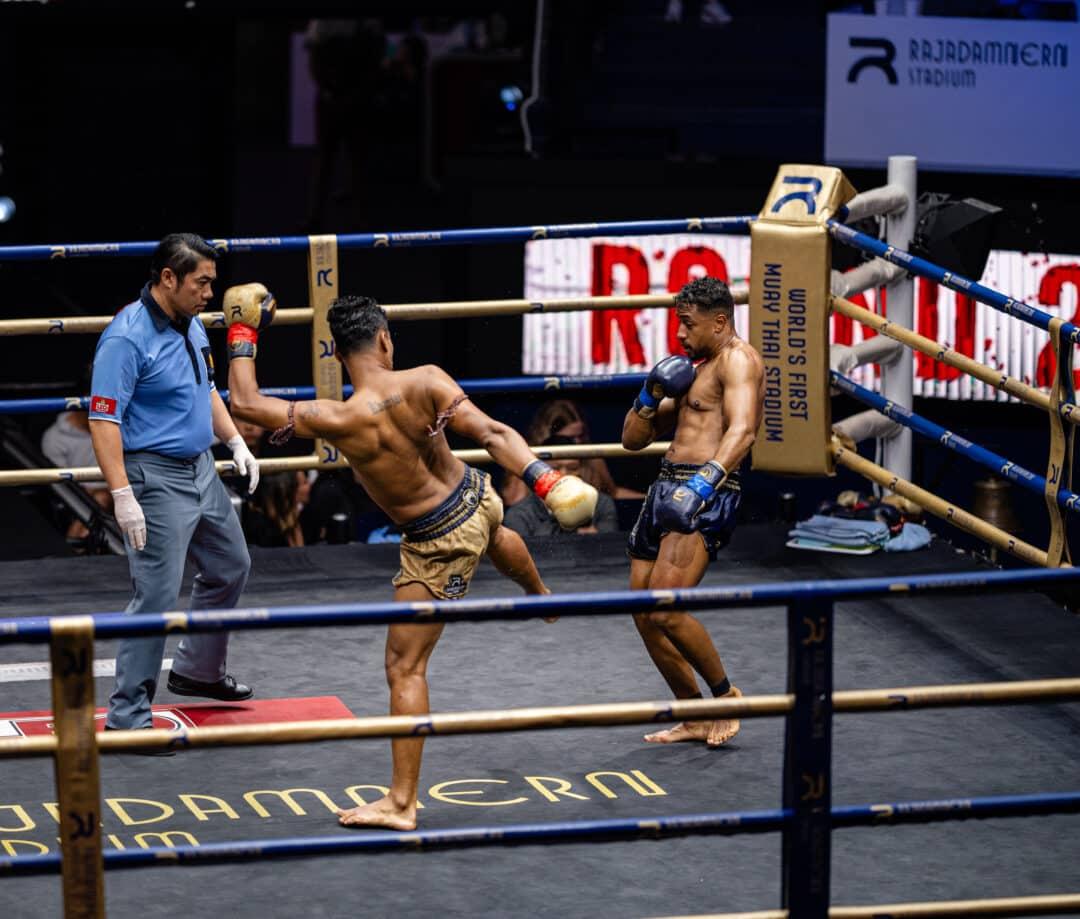
The city is closely associated with Thailand's professional stadium scene, including Rajadamnern Stadium and Lumpinee Stadium.
That gives travelers the opportunity to combine daytime training with an evening watching live Muay Thai.
Rajadamnern is particularly significant historically, having been established as one of Thailand's major Muay Thai stadiums. Current travel information also lists regular fight events at Bangkok's major stadiums. (Visit Thailand Today)
What makes Bangkok different?
Bangkok isn't a traditional "training camp vacation."
Instead, you're experiencing Muay Thai within a huge metropolitan city.
You can train in the morning, explore temples in the afternoon, eat street food in the evening and then head to a stadium for fights.
What to expect
Good for:
-
Travelers interested in Muay Thai history
-
Watching professional fights
-
Experienced fighters
-
Travelers who enjoy big-city exploration
-
Combining martial arts with sightseeing
Bangkok training tip
Don't choose accommodation based solely on the gym's reputation.
Bangkok traffic can make a seemingly short journey surprisingly inconvenient. Staying relatively close to your gym can make a huge difference if you're planning two training sessions per day.
🏝️ 2. Phuket — Muay Thai, Beaches & Training Camps


For many international travelers, Phuket is where a Muay Thai holiday becomes a full lifestyle experience.
The island has developed an extensive network of Muay Thai gyms and combat-sports camps. Time Out reported in 2026 that Phuket had nearly 40 Muay Thai gyms and camps, ranging from large international facilities to smaller family-run gyms. (Time Out Worldwide)
One of the best-known areas is Chalong's Soi Ta-iad, sometimes called "Fitness Street," where travelers can find multiple combat-sports facilities alongside restaurants, accommodation and fitness businesses.
Why train in Phuket?
You can build a routine around:
Morning:
🥊 Muay Thai training
Afternoon:
🏝️ Beach / swimming / sightseeing
Evening:
🍜 Thai food + recovery
Next morning:
🥊 Do it all over again!
Popular training areas include Chalong, Rawai, Patong and Bangtao.
Phuket is particularly interesting for travelers who want:
-
Muay Thai
-
MMA
-
Brazilian Jiu-Jitsu
-
Strength & conditioning
-
Fitness programs
-
Beach activities
-
A large international training community
Some Phuket gyms also combine Muay Thai with other combat sports, making the island attractive to people who want a broader martial-arts trip. (Time Out Worldwide)
Don't make this Phuket mistake
Don't assume every part of Phuket is close to every gym.
The island is larger than it looks on a map, and traffic can affect your daily schedule. If you're training twice a day, choosing accommodation near your gym is usually much more convenient than constantly crossing the island.
🌄 3. Chiang Mai — Muay Thai With a Northern Thailand Vibe


If Bangkok feels too metropolitan and Phuket feels too resort-oriented, Chiang Mai provides another option.
Northern Thailand offers a different atmosphere, with mountains, temples, markets and a generally slower pace of travel.
Several Chiang Mai-area gyms cater to international visitors, including smaller gyms and countryside camps. Recent local guides highlight facilities around Chiang Mai and nearby San Kamphaeng, as well as training opportunities in Pai. (Visit Thailand Today)
Why choose Chiang Mai?
Chiang Mai can work particularly well for travelers who want to spend several weeks in one location rather than constantly moving around.
You can combine:
🥊 Muay Thai
🌄 Mountain trips
🏯 Temple visits
🍜 Northern Thai cuisine
☕ Cafés
🌿 Nature
🛵 Local exploration
What about Pai?
For travelers who want a smaller-town experience, Pai is another possibility.
Pai is surrounded by mountains and has a strong backpacker and outdoor-travel culture. A Muay Thai training session can easily become part of a larger northern Thailand adventure.
One seasonal consideration
Travelers planning a Chiang Mai training trip should research northern Thailand's seasonal air-quality conditions before booking. Conditions can vary significantly during the year, particularly during the region's burning season.
🌴 4. Beyond the Big Three: Other Muay Thai Destinations
Bangkok, Phuket and Chiang Mai get most of the attention, but they're certainly not your only choices.
🏖️ Koh Samui


Koh Samui is an interesting option for travelers who want to combine Muay Thai with an island vacation.
Expect a combination of:
-
Beach life
-
Training
-
Island sightseeing
-
Diving and water activities
-
Thai food
-
Relaxation
It's particularly appealing if your travel companion isn't interested in spending every day inside a gym.
🌊 Krabi


Krabi provides another opportunity to combine combat-sports training with spectacular scenery.
Think:
🥊 Morning Muay Thai
🏝️ Island excursion
🧗 Rock climbing
🌅 Sunset
🍜 Thai dinner
For an adventure-focused traveler, that combination can be pretty hard to beat.
🌊 Pattaya


Pattaya is another established Muay Thai destination within relatively easy reach of Bangkok.
The city has gyms and camps that attract both local and international practitioners.
It's worth considering if you want to add a beach-city stop without traveling all the way to southern Thailand.
🗺️ Which Muay Thai Destination Fits Your Trip?
Rather than asking which city is universally "best," think about what kind of trip you want to have.
| Destination | Training Environment | Travel Experience | Particularly Useful For |
|---|---|---|---|
| 🇹🇭 Bangkok | Urban gyms + stadium culture | Huge city | Fight fans & experienced travelers |
| 🏝️ Phuket | Large international camps | Beaches + fitness | Training + vacation |
| 🌄 Chiang Mai | Smaller gyms + northern camps | Mountains + culture | Longer, slower trips |
| 🌴 Koh Samui | Island gyms | Beaches + island life | Training + relaxation |
| 🌊 Krabi | Smaller training scene | Adventure + beaches | Active travelers |
| 🌆 Pattaya | Established gyms/camps | Beach-city environment | Combining Bangkok-area travel with training |
| 🏔️ Pai | Smaller-town gym experience | Mountains + backpacker culture | Slow travel |
This isn't a ranking—each destination offers a different combination of training, geography, culture and lifestyle.
🥊 How Much Muay Thai Training Should You Do?
Here's where beginners sometimes get a little too ambitious.
You arrive in Thailand.
You're excited.
You see people training twice a day.
You think:
"I'm doing BOTH sessions every day!"
Your legs may have other opinions. 😂
Many traditional camps operate around morning and afternoon sessions, often six days per week, but beginners don't necessarily need to jump straight into that schedule. A recent Thailand training guide recommends allowing your body time to adapt and starting beginners with one session per day before increasing volume. (Visit Thailand Today)
A realistic beginner schedule
Days 1–3:
🥊 One session per day
Days 4–7:
🥊 One session + optional light conditioning
Week 2:
🥊 Consider adding a second session if your body has adapted
Longer stay:
🥊 Build your schedule around recovery rather than simply maximizing training hours.
Remember:
Training harder isn't automatically training better.
💰 How Much Does a Muay Thai Trip to Thailand Cost?
Your total budget depends heavily on where you stay, the type of gym you choose and whether your accommodation and meals are included.
Recent 2026 travel information puts individual drop-in classes around ฿300–600, weekly training packages around ฿2,000–3,500, and some monthly group-training packages around ฿8,000–14,000. All-inclusive camp packages with accommodation and meals can cost considerably more. (Visit Thailand Today)
Your basic budget categories
| Expense | What to Budget For |
|---|---|
| ✈️ Flights | International + domestic flights |
| 🥊 Training | Drop-ins, weekly or monthly packages |
| 🏨 Accommodation | Hostel, hotel, apartment or camp |
| 🍜 Food | Street food to restaurants |
| 🚕 Transportation | Grab, taxis, buses, trains, flights |
| 🩹 Recovery | Massage, physio, ice baths, etc. |
| 🥊 Equipment | Gloves, wraps, shorts, protective equipment |
| 🎟️ Fights | Stadium tickets |
| 🏝️ Activities | Tours, beaches, attractions |
Pro tip: Ask the gym whether accommodation, airport transfers, meals, equipment rental and training are included before comparing package prices.
🎒 What to Pack for a Muay Thai Training Trip
You don't need to bring your entire bedroom with you.
Essential items
-
🥊 Muay Thai gloves
-
🩹 Hand wraps
-
👕 Lightweight training clothes
-
🩳 Muay Thai shorts
-
🧦 Socks
-
👟 Running shoes
-
🩴 Sandals
-
🧴 Sunscreen
-
🧼 Toiletries
-
💧 Reusable water bottle
-
🦵 Compression/recovery gear if you use it
-
🔌 Travel adapter
-
📱 Phone + charger
-
🪪 Passport and travel documents
Should you bring your own gloves?
If you already own good gloves, bringing them is worthwhile.
If you're flying light, however, many gyms have equipment available for purchase or rental. Check with your specific camp before assuming what's provided.
🧴 Recovery Is Part of the Training
One of the biggest mistakes first-time training travelers make is thinking only about the workout.
Your recovery matters just as much.
Thailand's heat and humidity can make training feel significantly harder than a familiar gym session at home.
Build recovery into your itinerary:
💧 Hydrate
Drink regularly throughout the day, especially around training.
😴 Sleep
Your body needs sleep to recover from repeated training sessions.
🍚 Eat
Don't underestimate how much food you'll need when training hard.
🧘 Stretch
Mobility work can help you manage the physical demands of repeated sessions.
💆 Consider massage
Traditional Thai massage is widely available, although aggressive bodywork immediately after hard training isn't necessarily what your body needs. Listen to how you feel.
🏟️ Don't Just Train — Watch a Fight


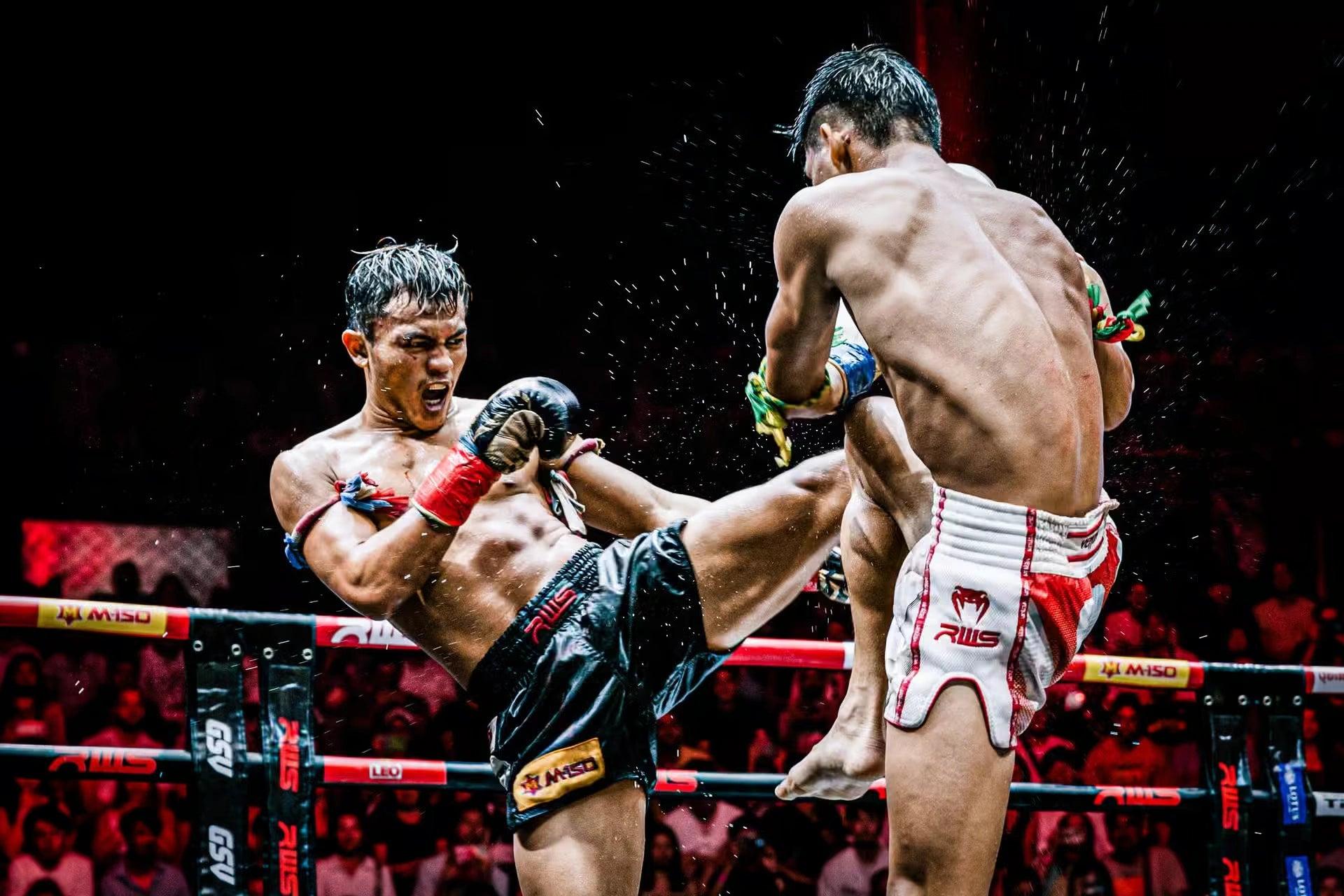
One of the coolest parts of a Muay Thai trip is watching the sport live.
Instead of only learning techniques inside the gym, you'll see how fighters use them under competitive conditions.
In Bangkok, Rajadamnern and Lumpinee are major venues associated with the professional Muay Thai scene. Phuket also has venues such as Patong Boxing Stadium, while Chiang Mai has its own local fight scene. (Visit Thailand Today)
A great travel routine
Morning: Train 🥊
Afternoon: Explore Thailand 🇹🇭
Evening: Watch Muay Thai 🏟️
Night: Eat something delicious 🍜
Next day: Recover 😴
That's a pretty memorable vacation.
🧠 Muay Thai Etiquette for Travelers
You're visiting someone's country to participate in a sport with a long cultural history.
A little respect goes a long way.
Remember to:
-
Listen carefully to your trainers.
-
Arrive on time.
-
Follow gym rules.
-
Respect training partners.
-
Don't treat sparring as a street fight.
-
Ask before photographing people.
-
Respect traditional rituals and ceremonies.
-
Keep your training area clean.
-
Don't assume every Thai fighter wants to speak English.
-
Learn a few basic Thai phrases.
Even something as simple as "Sawasdee" (hello) and "Khob khun" (thank you) can make interactions more welcoming.
🗓️ How Long Should Your Muay Thai Trip Be?
One Week
Good for:
-
Trying Muay Thai
-
One or two gyms
-
Watching a fight
-
Exploring one destination
Two Weeks
A great opportunity to settle into a training routine while still having plenty of sightseeing time.
One Month
This is where the experience starts to feel less like a vacation workout and more like temporarily living the Muay Thai lifestyle.
You could even divide the trip:
Week 1: Phuket 🏝️
Week 2: Chiang Mai 🌄
Week 3: Bangkok 🏙️
Week 4: Flexible / return to your favorite location 🥊
For a longer itinerary, however, remember that constantly changing hotels can interfere with recovery and training consistency.
🥊 Example 14-Day Muay Thai Thailand Itinerary
Days 1–4 — Bangkok 🇹🇭
-
Arrive
-
Recover from flight
-
Train once daily
-
Visit temples
-
Explore Bangkok food markets
-
Watch a Muay Thai event
Days 5–9 — Chiang Mai 🌄
-
Train
-
Explore Old City
-
Visit temples
-
Explore northern Thai food
-
Take a nature excursion
-
Visit a local fight
Days 10–14 — Phuket 🏝️
-
Train
-
Explore Chalong/Rawai
-
Visit the beach
-
Try another gym
-
Recover
-
Enjoy the island before flying home
This itinerary gives you three very different perspectives on Muay Thai travel rather than staying in one location for the entire trip.
📸 Your Muay Thai Trip Can Become a Travel Story
One of the best things about combining martial arts and travel is that there's so much content beyond the actual training.
You could document:
🎥 Day 1: First Muay Thai class in Thailand
🎥 Day 2: What ฿500 gets you at a Thai gym
🎥 Day 3: Thai street food after training
🎥 Day 4: First Muay Thai fight
🎥 Day 5: Training with Thai fighters
🎥 Day 6: Exploring Bangkok
🎥 Day 7: Phuket vs Bangkok training experience
🎥 Day 8: Muay Thai equipment shopping
🎥 Day 9: Recovery day in Thailand
🎥 Day 10: One week of Muay Thai — what changed?
That combination of travel + fitness + culture + personal challenge makes for a seriously compelling travel story.
🌏 Final Thoughts: Make the Journey Part of the Training
A Muay Thai trip to Thailand doesn't have to mean spending every waking hour inside a gym.
The beauty of traveling for martial arts is that the training can become the framework for discovering the country.
Bangkok can introduce you to the sport's major stadium culture.
Phuket can combine intensive training with beaches and a huge international combat-sports community.
Chiang Mai can give you a slower northern experience surrounded by mountains and culture.
And destinations such as Koh Samui, Krabi, Pattaya and Pai can add completely different flavors to the journey.
Whether you're a complete beginner, an experienced fighter or simply someone looking for a more adventurous vacation, Thailand offers plenty of ways to build a trip around Muay Thai.
Pack your gloves.
Respect the culture.
Train smart.
Explore often.
And most importantly...
Enjoy the vibes. 🇹🇭🥊
🔎 SEO Keywords
Muay Thai travel guide Thailand, Muay Thai training Thailand, Muay Thai camps Thailand, Bangkok Muay Thai training, Phuket Muay Thai camps, Chiang Mai Muay Thai, Thailand martial arts travel, Muay Thai holiday, best Muay Thai gyms Thailand, Muay Thai training camp, Thailand fight camps, Muay Thai vacation, Muay Thai tourism, training Muay Thai in Thailand, Muay Thai stadium Bangkok
Suggested Tags
Muay Thai, Thailand Travel, Muay Thai Thailand, Bangkok Travel, Phuket Travel, Chiang Mai Travel, Martial Arts Travel, Muay Thai Training, Thailand Training Camps, Combat Sports Travel, Thailand Vacation, Fitness Travel, Martial Arts Thailand, Travel Guide, VibesTravelling
Suggested Featured Image


Image research used for this article includes current 2026 travel and Muay Thai sources; specific gym prices, schedules and fight cards can change, so travelers should confirm details directly with the gym or venue before booking.
Advertisement